
Best practices for GHG accounting
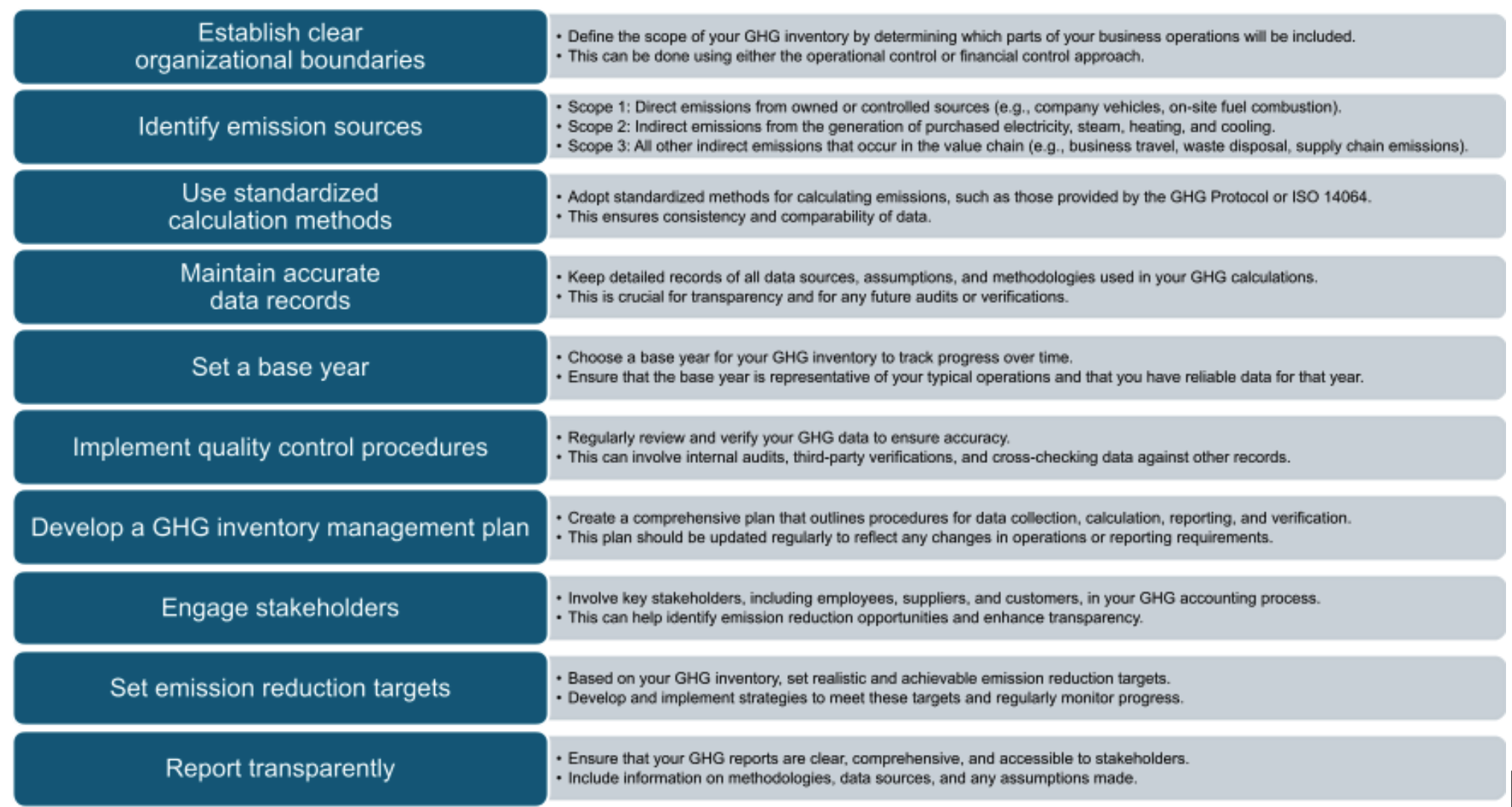
Implementing best practices for GHG accounting ensures accurate, transparent, and consistent reporting of greenhouse gas emissions. Here are some key best practices:
Tools for GHG accounting
There are several tools available for GHG accounting that can help your business measure, report, and manage greenhouse gas emissions. Here are some notable ones:
The GHG Protocol provides a comprehensive suite of tools for calculating emissions. These tools are widely used and include:
- Cross-Sector Tools: Applicable to many industries and businesses regardless of sector.
- Sector-Specific Tools: Designed for specific industries like manufacturing, transportation, and agriculture.
- Country-Specific Tools: Customized for specific countries
Natural Resources Canada’s Greenhouse Gas Equivalencies Calculator
This online tool helps businesses estimate their emissions by converting various activities into CO2 equivalents. It’s a useful resource for making rough estimates and understanding the impact of different activities.
BDC’s GHG Emissions Calculator
The Business Development Bank of Canada (BDC) offers an online calculator, included within their GHG Calculator Toolkit, that helps businesses estimate their GHG emissions. This tool is designed to be user-friendly and provides a good starting point for small businesses looking to understand their carbon footprint.
The Net-Zero Challenge provides guidance and tools specifically for small and medium-sized enterprises (SMEs) to help them develop GHG inventories and net-zero plans. This includes step-by-step instructions and checklists for creating a credible net-zero plan.
GHGenius is a lifecycle assessment model developed by Natural Resources Canada. It helps businesses estimate the GHG emissions associated with different fuels, technologies and transportation sources over their entire lifecycle.
Carbon Trust’s Footprint Calculator
The Carbon Trust offers a footprint calculator that helps businesses measure their carbon emissions. The tool is designed to specifically support UK based SMEs. This tool is particularly useful for businesses looking to identify areas for improvement and track progress over time.
Tools for Scope 3 emissions accounting
Here are some tools that can help small businesses overcome the challenges of calculating Scope 3 emissions:
Simplified GHG Emissions Calculator: This free tool from the US EPA helps organizations estimate and inventory their annual greenhouse gas emissions, including Scope 3. It’s designed for small- to medium-sized organizations and provides guidance on data collection and emissions calculation
SME Climate Hub: This platform offers a Scope 3 Specific Calculator that uses procurement data to generate accurate Scope 3 emissions data. It helps identify emission hotspots from suppliers and provides sector-specific guidance
GHG Protocol Tools: The Greenhouse Gas Protocol offers various tools and resources for calculating Scope 3 emissions, also known as Corporate Value Chain Accounting. These include emission factor databases and guidance documents to help businesses accurately measure and report their emissions
Supply Chain Emission Factors: The US Environmental Protection Agency provides a comprehensive set of supply chain emission factors covering all categories of goods and services in the US economy. These factors can be used to calculate emissions for purchased goods and services
Lifecycle Assessment (LCA) Software: Tools like SimaPro and GaBi help businesses perform lifecycle assessments to understand the environmental impact of products from production to disposal. These tools can be particularly useful for calculating Scope 3 corporate value chain emissions.