
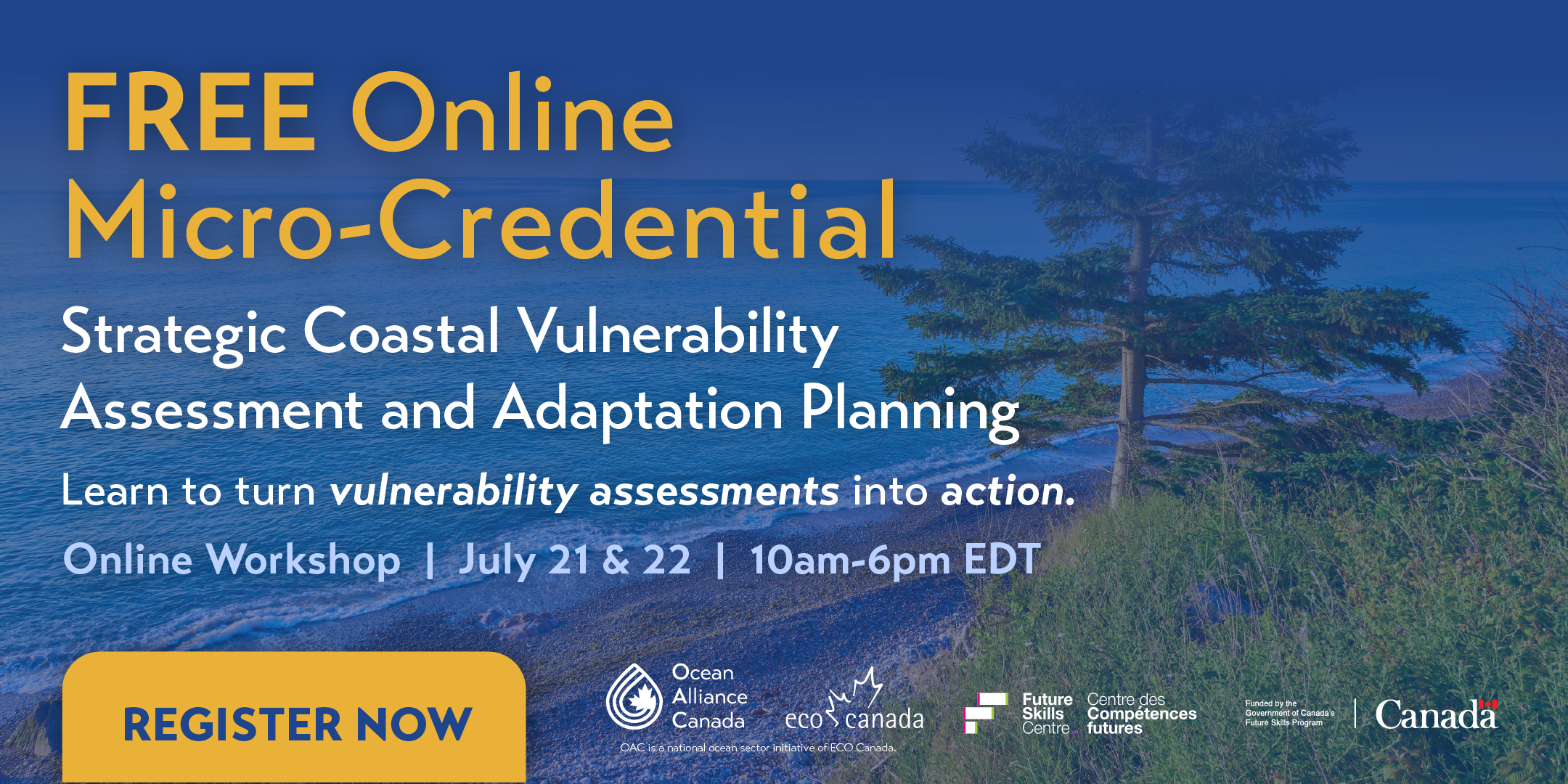
Strategic Coastal Vulnerability Assessment and Adaptation Planning
July 21 @ 10:00 am - 6:00 pm
Coastal communities across Canada are increasingly facing challenges associated with sea level rise, coastal erosion, flooding, and extreme weather events. Building resilience requires more than understanding risks. It requires the ability to assess vulnerabilities, engage stakeholders, and develop adaptation strategies that support long term sustainability.
This two day micro credential provides participants with the knowledge needed to assess coastal climate risks and translate findings into actionable adaptation and management plans. Through expert-led instruction, participants will learn structured approaches to vulnerability assessment, spatial risk analysis, adaptation planning, and coastal governance.
Dates: July 21 & 22 10-6pm EDT
- Two days of live online instruction delivered by an industry expert
- A digital course textbook and learning resources
- A Certificate of Completion
Course Modules
- Module 1: Coastal Systems, Climate Risks & Vulnerability Concepts
- Module 2: Vulnerability Assessment Frameworks & Indicators
- Module 3: Spatial Analysis, Mapping & Risk Visualization
- Module 4: Adaptation Strategy Development & Prioritization
- Module 5: Coastal Management Planning, Governance & Implementation
Who Should Attend?
This training is designed for Indigenous communities, environmental and ocean professionals, planners, community leaders, researchers, students, consultants, government representatives, and others involved in coastal management, climate adaptation, or resilience planning.
Indigenous participants are especially encouraged to register.
This training is offered free of charge through ECO Canada’s Ocean Pathways initiative. Participants who are interested in bringing this training to their community or organization in the future are encouraged to connect with the ECO Canada team following the course to discuss future delivery opportunities.