*This blog post was originally published by Staarsoft, and is re-posted by ECO Canada with their permission*
You know it’s a great conference when you’re still thinking about it — and writing about it — one month later. ECO Impact 2026 delivered conversations that continue to influence how organizations across Canada are shaping Sustainability, innovation, and long‑term strategic resilience. This reflects the growing importance of Sustainability consulting in Canada and strong ESG governance frameworks.
This year reinforced that Sustainability is no longer a side topic — it is now fully embedded in Canada’s economic narrative, influencing decisions on talent, energy, food systems, natural assets, governance, and national competitiveness.
Viewed through an auditing lens, these conversations highlight the growing need for structured controls, transparent governance, and evidence‑based accountability to ensure organizations can adapt, comply, and thrive in this evolving landscape.

1. Retaining Canadians, Innovation, and Technical Capacity
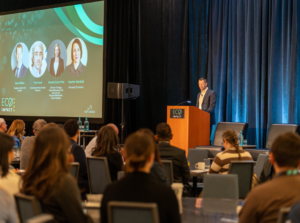
From an auditing standpoint, the Opening Plenary, “The Tipping Point: Accelerating Innovation in an Age of Disruption,” underscored the need for organizations to demonstrate robust controls and governance mechanisms that support the retention of talent, technology, and business leadership in Canada. These themes also highlight Canada’s innovation ecosystem and the need for talent retention in the Sustainability sector.
The discussions highlighted that sustaining a competitive workforce and innovation ecosystem requires environments where career development, technical capability, and organizational growth are supported through documented processes, consistent accountability structures, and measurable performance indicators.
For auditors, this theme reinforces the importance of assessing whether organizations have:
- Clearly defined governance frameworks to support long‑term talent development,
- Documented succession and capability‑building processes,
- Risk‑based approaches to managing human capital and technological assets, and
- Evidence‑based monitoring and continual‑improvement mechanisms
Ensuring these controls are in place provides assurance that organizations can scale responsibly and maintain resilience in an evolving sustainability and innovation landscape.
2. Energy Continues to Shape Canada’s Economic and Sustainability Landscape
From an auditing perspective, Canada’s diverse energy mix — including oil and gas, nuclear, hydroelectricity, and emerging energy technologies — represents a critical area of operational, regulatory, and strategic risk. Evaluating how organizations integrate energy considerations into their governance and management systems is essential for ensuring long‑term resilience. This diversity reinforces the role of Canada’s energy transition in shaping long‑term competitiveness.
Rather than treating energy as a standalone environmental issue, auditors assess whether energy‑related impacts, dependencies, and opportunities are embedded within the organization’s broader governance, risk management, and operational planning frameworks. This includes reviewing:
- The presence of documented, risk‑based processes for managing energy consumption and efficiency
- Alignment of energy‑related objectives with organizational strategy and compliance obligations
- Controls that ensure transparent monitoring, measurement, and reporting of energy performance – these considerations are central to sustainable energy governance and energy‑related ESG risk management.
- Continual‑improvement mechanisms that support adaptation to changing technologies and regulatory expectations
By integrating energy into the audit scope, organizations can demonstrate structured decision‑making, reduce exposure to operational and regulatory risks, and strengthen their overall sustainability posture.
3. The Future of Food Requires Collaboration, Investment, and Capability
The “Future of Food” discussion underscored the need for stronger governance structures and cross‑sector accountability within the agri‑food ecosystem. The themes highlighted by speakers—particularly the importance of increasing private‑sector investment, strengthening linkages between producers, innovators, educators, and investors, and enhancing agricultural awareness through early education—reflect systemic gaps that require evaluation in food‑system governance. These challenges align closely with broader conversations about sustainable agriculture innovation and food system resilience in Canada.
Auditors can assess whether organizations operating within the agri‑food value chain have:
- Documented processes that support coordinated decision‑making across partners and stakeholders
- Controls to ensure that investment, innovation, and capability‑building activities are aligned with strategic objectives
- Risk‑based mechanisms to identify vulnerabilities related to supply chains, workforce capability, and regulatory compliance
- Evidence‑driven approaches for monitoring the effectiveness of collaboration and knowledge‑sharing initiatives
Strengthening these governance and accountability structures is essential for building a food system that is resilient, transparent, and capable of meeting long‑term sustainability and market expectations.
4. Nature Is Being Reframed as an Investable Asset
A key theme this year was the increasing recognition of nature as a measurable financial asset. Discussions highlighted the need for structured methods to value and quantify natural systems, ensuring they can be incorporated into financial planning, risk assessments, and strategic decision‑making. This shift emphasizes the importance of controls, verification processes, and transparent methodologies that allow stewardship and restoration activities to be treated as auditable components of organizational performance. This shift reflects the rise of natural asset valuation and nature‑based investing strategies across Canada.
5. Accountability Is the Common Thread Across ESG, Risk, and Sustainability
Whether an organization uses the language of Sustainability, ESG, CSR, risk, opportunity or growth, the environmental component must be embedded within day‑to‑day decision‑making and operational controls. This underscores the importance of ESG accountability in Canada and the need for ISO‑aligned sustainability management systems.
The increasing demand for consistent, structured sustainability practices — particularly in rapidly expanding sectors such as AI data centres — reinforces the need for ISO‑aligned management systems, transparent governance structures, and verifiable processes that ensure accountability, compliance, and continual improvement.
Celebrating the ECO IMPACT Awards & Reconnecting With Colleagues
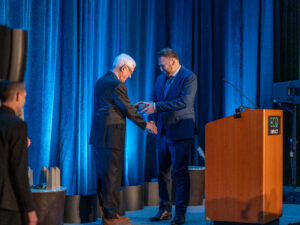
One of the most meaningful moments of ECO Impact 2026 was the ECO IMPACT Awards Gala, which recognized environmental professionals, organizations, and emerging leaders who are advancing sustainability and workforce excellence across Canada. Congratulations to all of this year’s award recipients — your work continues to inspire the sector. [ecoimpact.ca]

You can explore the full list of winners on ECO Canada’s website:  ECO IMPACT Awards
Beyond the awards, the event also offered the opportunity to reconnect with colleagues, partners, friends, and long‑standing collaborators. These moments of conversation and community are part of what makes ECO Impact such an energizing experience each year.
How Organizations Can Move From Insight to Implementation
Organizations across sectors are increasingly expected to embed Sustainability, accountability, and risk into their everyday operations. This requires:
- Strong alignment across governance and operational structures
- Structured management systems (ISO 14001, ISO 45001, ISO 9001)
- Risk‑based and materiality‑driven planning
- Reliable reporting, training, and assurance
- Repeatable processes that drive continual improvement
- Tools that support scale and transparency
For organizations ready to streamline and digitize these processes, Staarsoft®, built on a disciplined management‑systems methodology, offers a platform designed to support Sustainability implementation at scale.
Staarsoft® Key Takeaways
For those who want to dive deeper into the themes, we’ve shared a full breakdown of our takeaways in a dedicated Staarsoft® post. You can read it here
From Insight to Implementation
At Tavares Group Consulting, we help organizations move beyond conversation — turning Sustainability, ESG, and resilience into actionable strategy, structured systems, and measurable performance.
As a corporate Sustainability and CSR advisory firm with deep expertise in environmental and health & safety management systems, drinking water quality, training, reporting, and Sustainability planning, we support organizations in operationalizing Sustainability through a disciplined, ISO‑aligned, management‑systems approach.
Our cross‑sector experience spans agriculture, automotive, construction, education, electronics, energy, food and beverage, municipal operations, and retail. We apply risk‑based materiality and the continual‑improvement (PDCA) cycle to ensure programs are credible, practical, and performance‑driven.
Whether you are:
- Strengthening Sustainability, ESG, CSR, risk, opportunity, or governance accountability
- Reframing nature as an asset
- Navigating the future of food or energy
- Working to retain business, technology, and talent in Canada
Now is the time to operationalize Sustainability.
Engage Tavares Group Consulting to:
- Clarify where Sustainability lives across governance, operations, and decision‑making
- Align strategy with management systems, data, and accountability for consistent execution
- Anticipate change and convert risk into opportunity using a proven PDCA‑based framework
We provide structured Sustainability support — including baseline assessments, strategy development, training, GHG inventories, reporting, and assurance — enabling organizations to strengthen performance and credibility.
When your organization is ready to digitize and streamline these structured processes, Staarsoft®, built directly from our management‑systems methodology, provides the platform to support implementation at scale.
Sustainability is always there — how you recognize and act on it is the differentiator.
Photo Credits: All conference photos courtesy of ECO Canada